Order already exists. We do not create order — we are embedded within it.
By recognizing our belonging to a single structure, we attempt to find a coherent way of existing within it. Yet harmony is already present — it becomes perceptible only in moments of stillness.
I do not invent structures; I try to sense those that already exist. Geometry, symbol, and ornament are not decoration for me. They are a language of knowledge that, for centuries, has helped humanity comprehend the structure of the world and its own place within it.
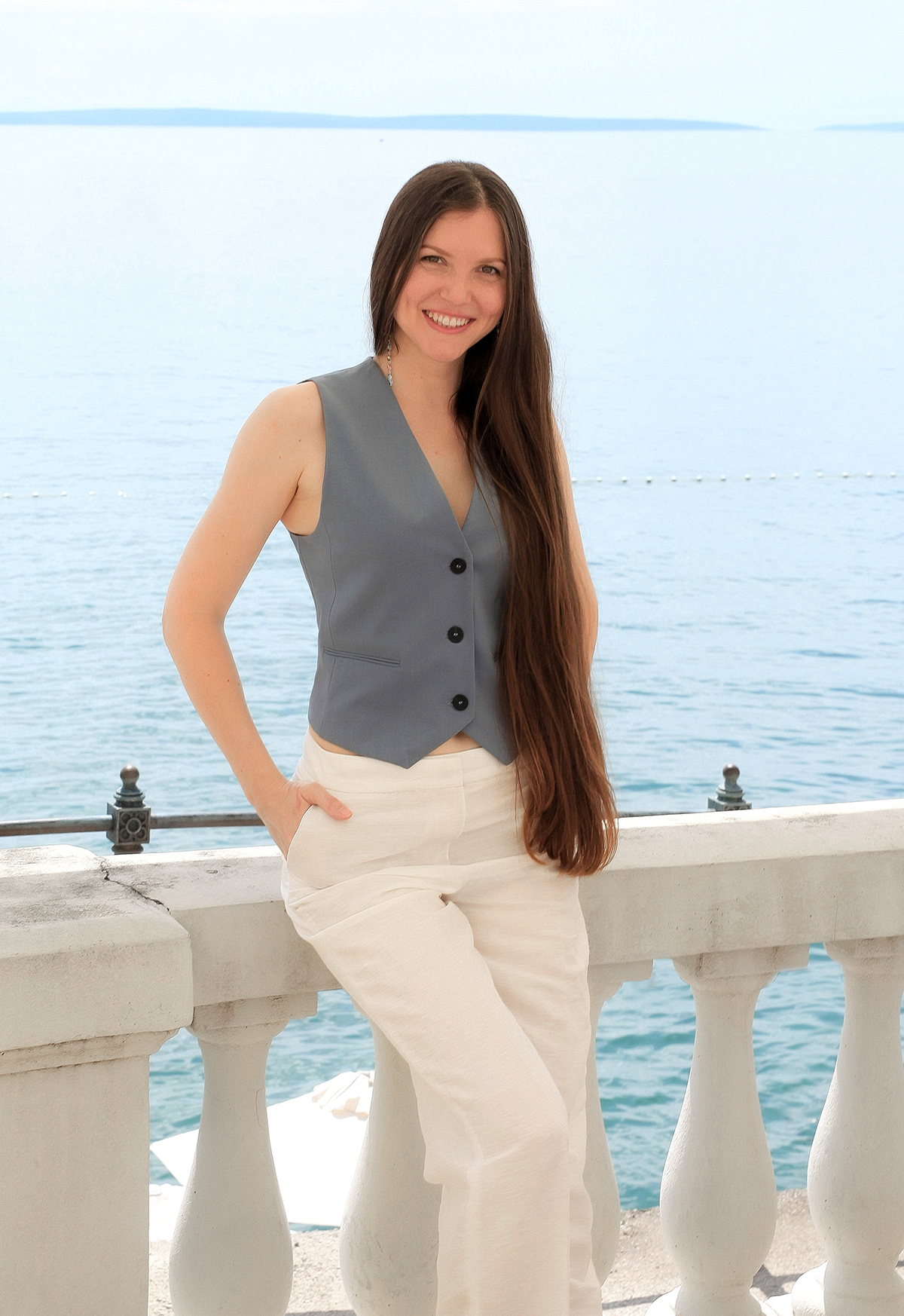
Tetiana Gryshchenko
Ukrainian contemporary conceptual artist
Ukrainian contemporary conceptual artist
Artist Today
Tetiana Gryshchenko is a Ukrainian contemporary conceptual artist working with geometric abstraction, sacred geometry, and symbolic minimalism.
Her current practice is grounded in an understanding of geometry as a visual language of an already existing structure — a way of perceiving balance, rhythm, and transformation. Through reduction, repetition, and symbolic form, she constructs quiet systems where memory, consciousness, and inner states intersect.
Rather than illustrating external narratives, Gryshchenko focuses on states of stillness and internal order. Her works function as contemplative spaces — places where form becomes a vessel for invisible connections that shape human experience.
Selected Paintings
This selection presents Gryshchenko’s recent paintings — a period in which she has clearly articulated the direction of her work and the visual language through which she speaks.
The Ornament series (Ornament – Time, Ornament – Luck) marks a point of concentration within this language. Here, geometry fully reveals itself as structure — a system that allows rhythm, order, and unpredictability to coexist. Repetition carries no decorative function; it operates as a method of attunement to form, where meaning emerges through proportion and relationship rather than narration.
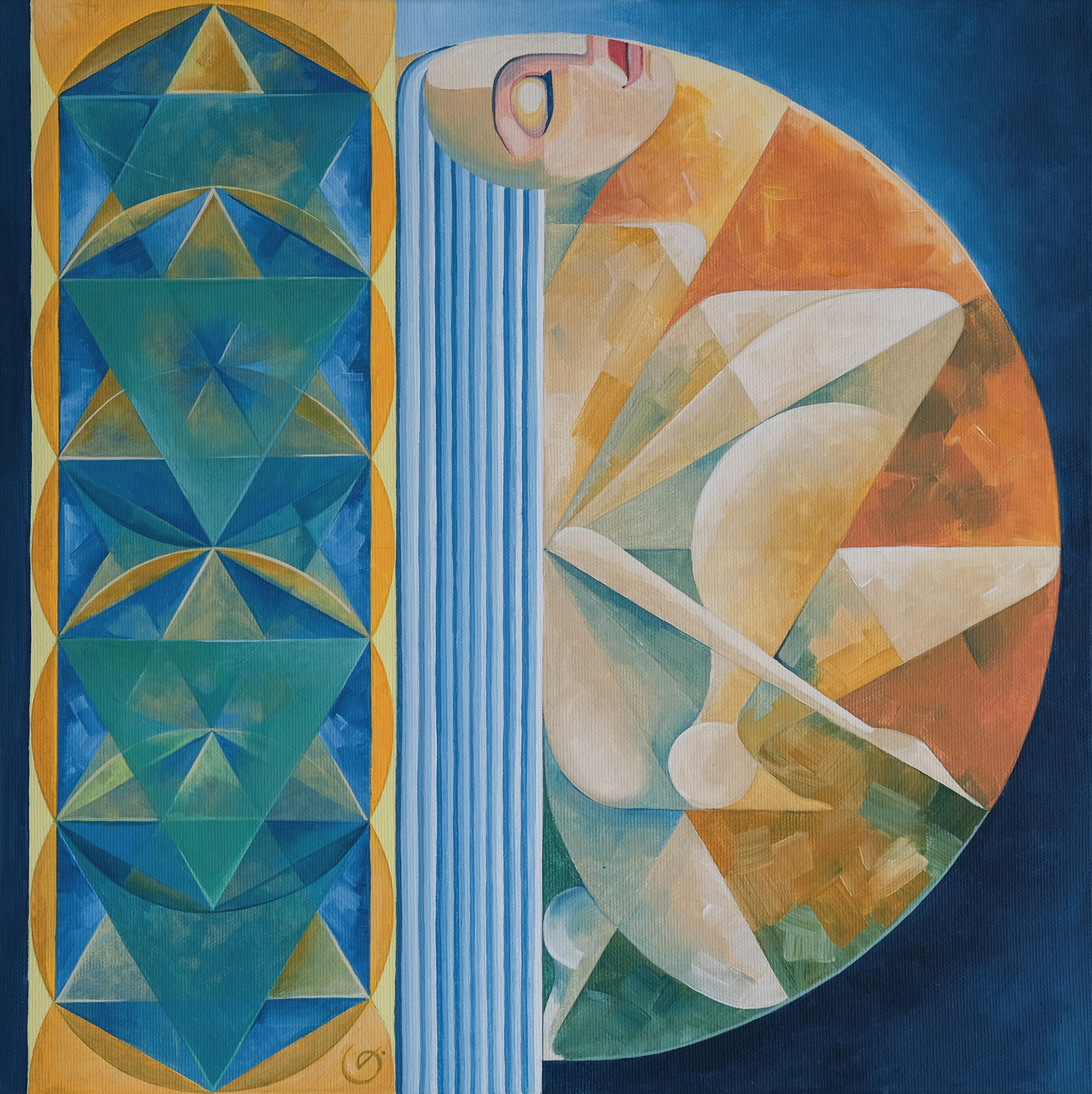
Ornament – Time
Acrylic on canvas, 40x40 cm, 2024
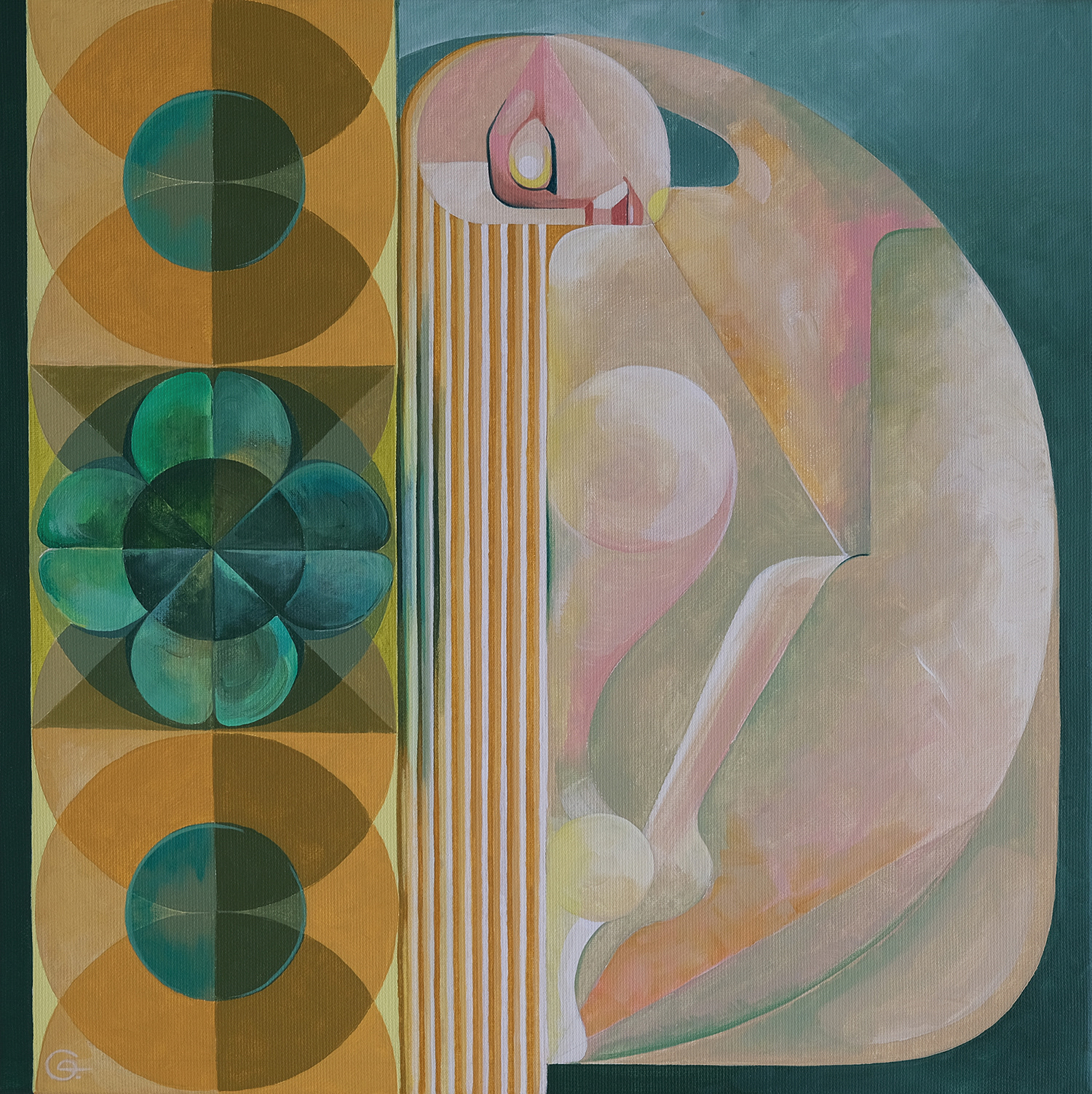
Ornament – Luck
Acrylic on canvas, 40x40 cm, 2024
In works such as Self-Talk, Vessel, and Youth, the human figure appears not as an image or character, but as a carrier of internal processes. The body functions as a vessel for states — a space where different rhythms of thought, tension, and stillness coexist within a restrained, carefully aligned form.
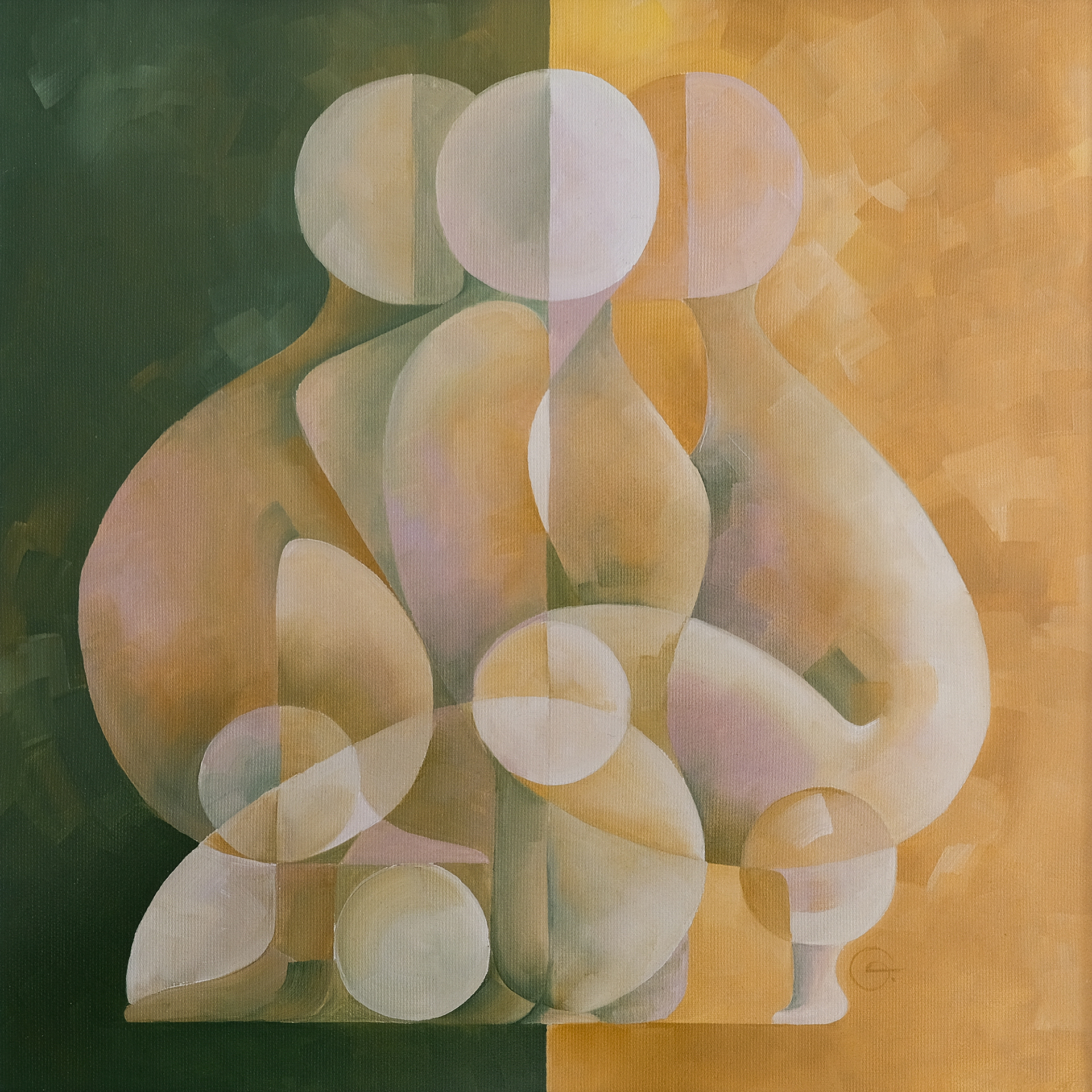
Self - Talk
Oil on canvas, 40x40 cm, 2025
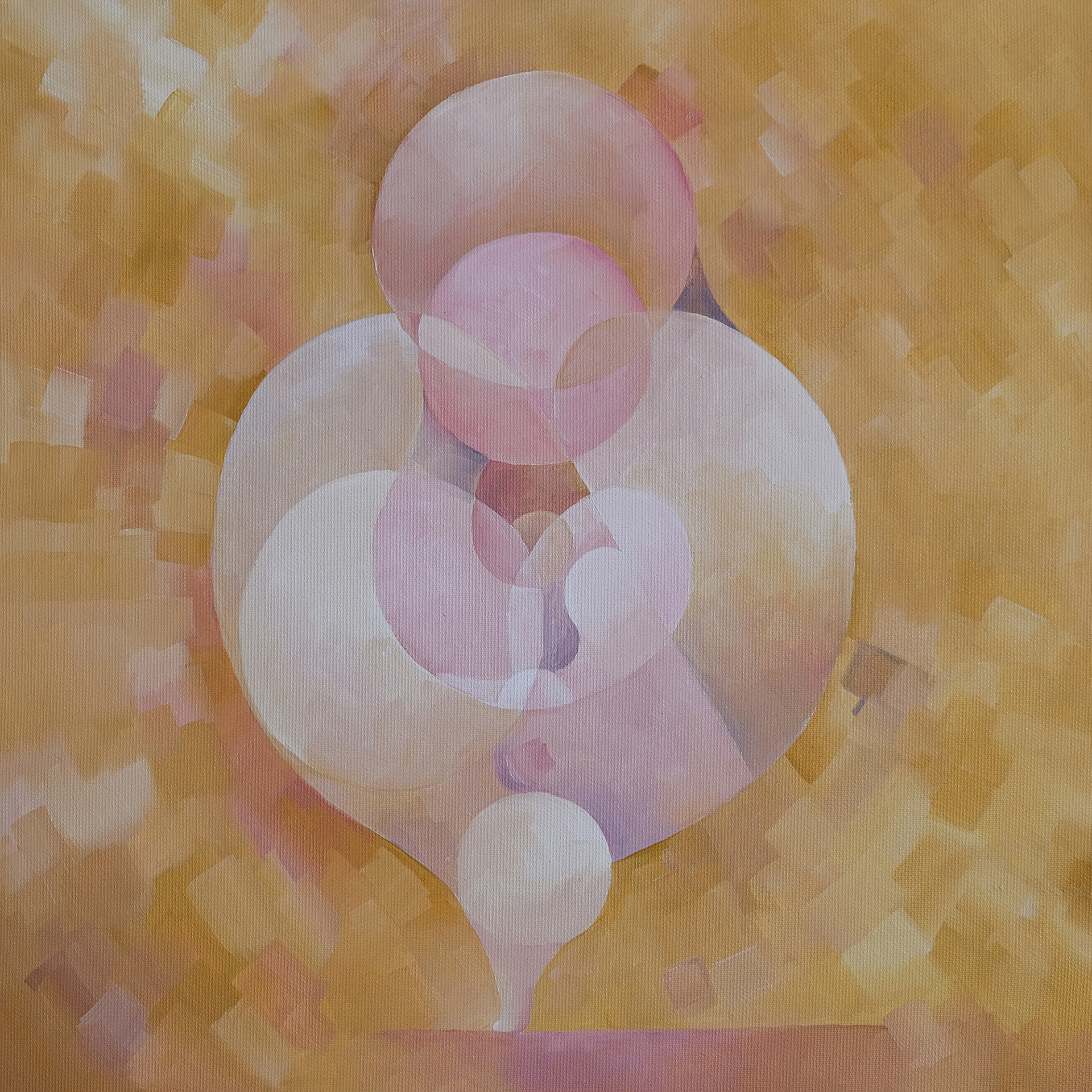
Vessel
Oil on canvas, 40x40 cm, 2025
Paintings like Full Moon and Unbreakable introduce moments of pause and inner concentration. Light, stillness, and tension are not explained but sensed — through compositional precision and attentive relationships between elements.
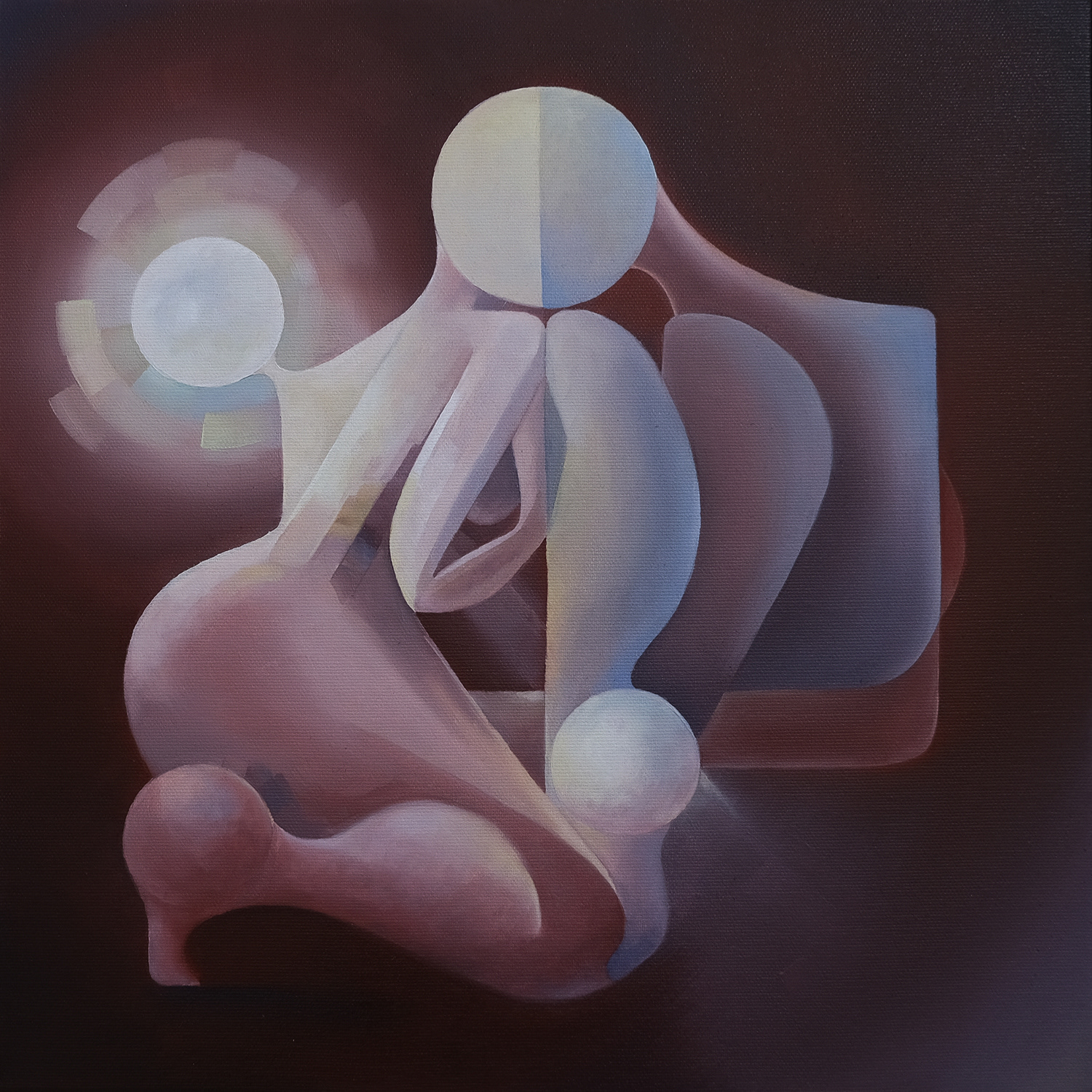
Full Moon
Oil on canvas, 40x40 cm, 2025
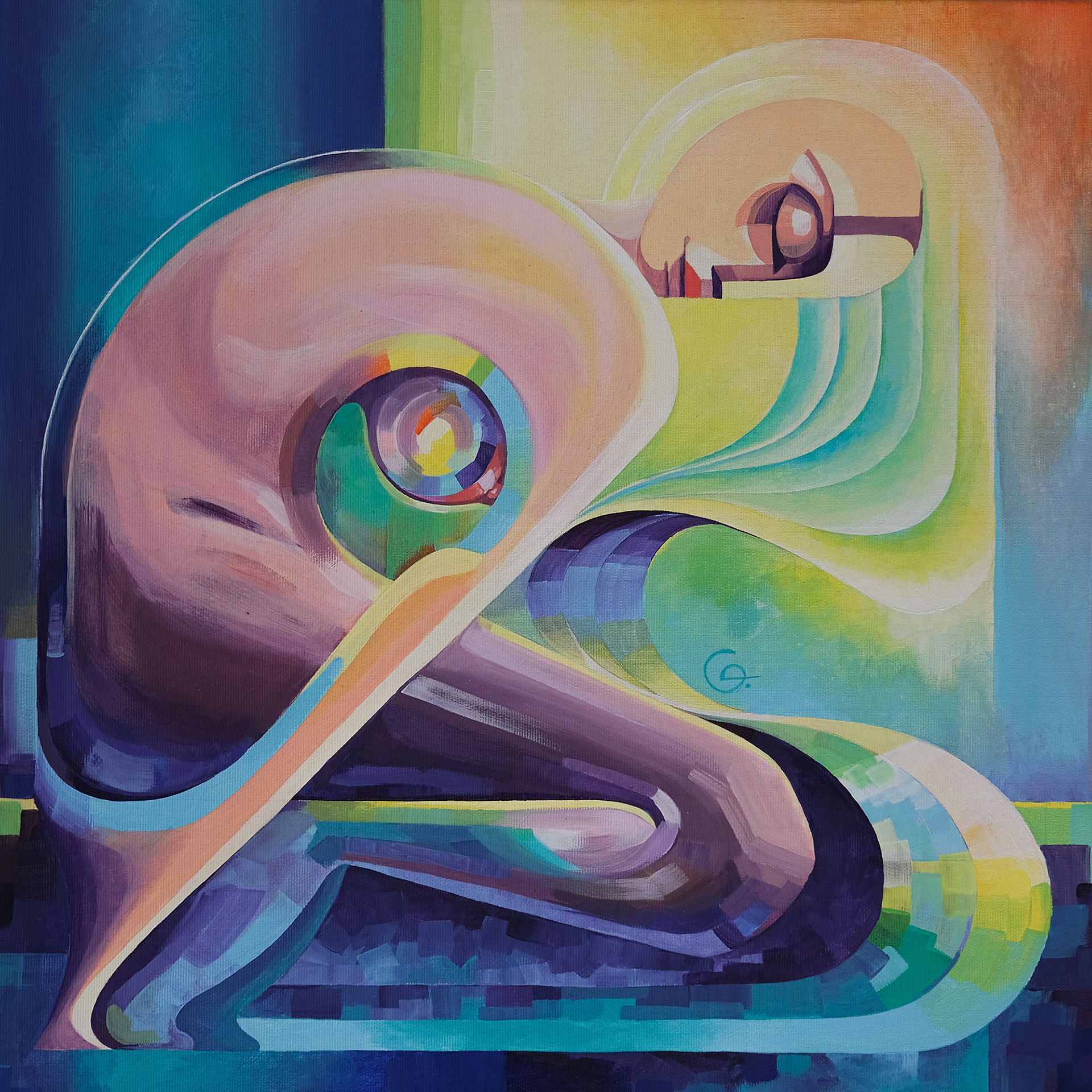
Unbreakable
Acrylic on canvas, 50x50 cm, 2023
Together, these works form a unified system — not as a closed statement, but as an open field in which the viewer is invited to slow down and sense the interaction of structure, rhythm, and silence.
Graphic Works
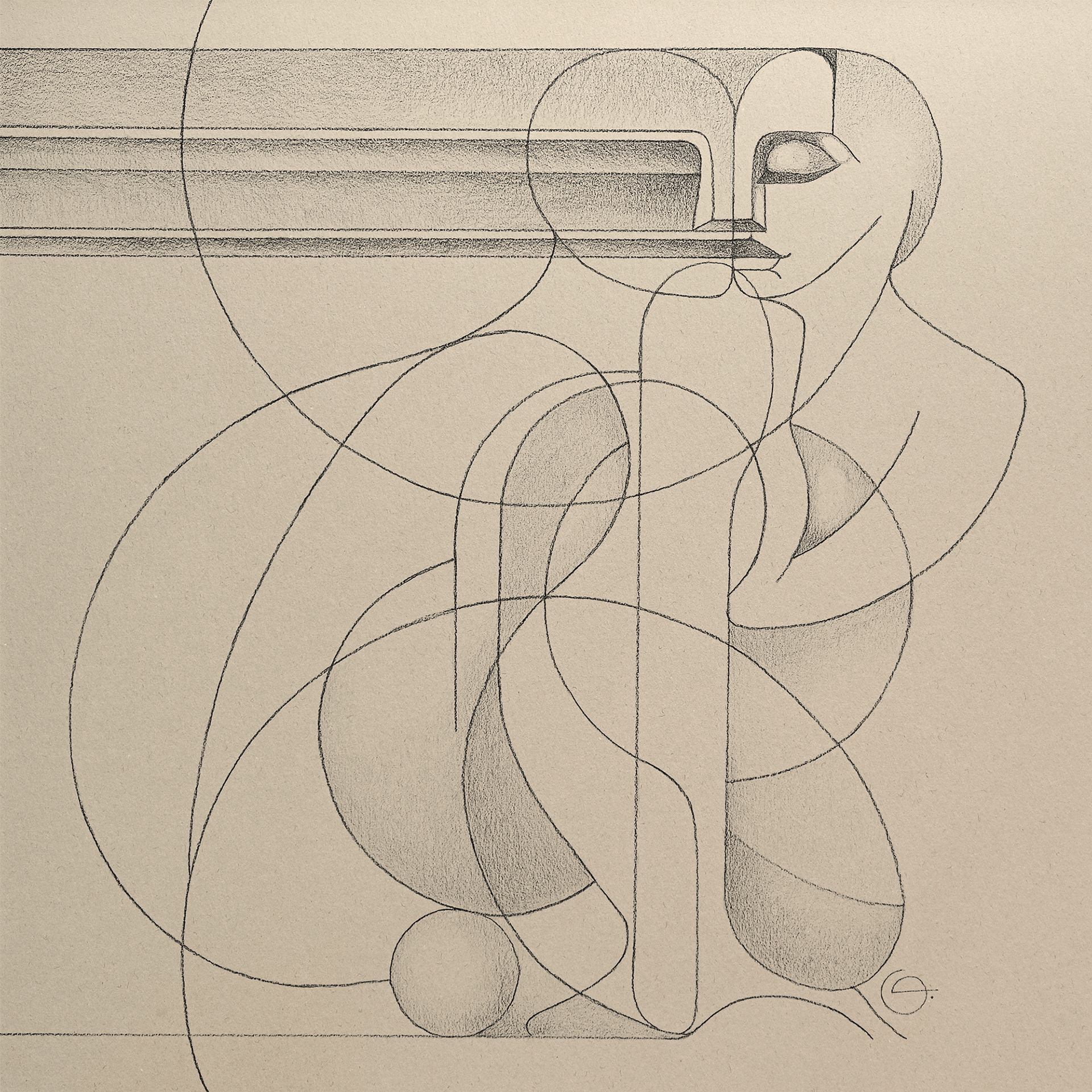
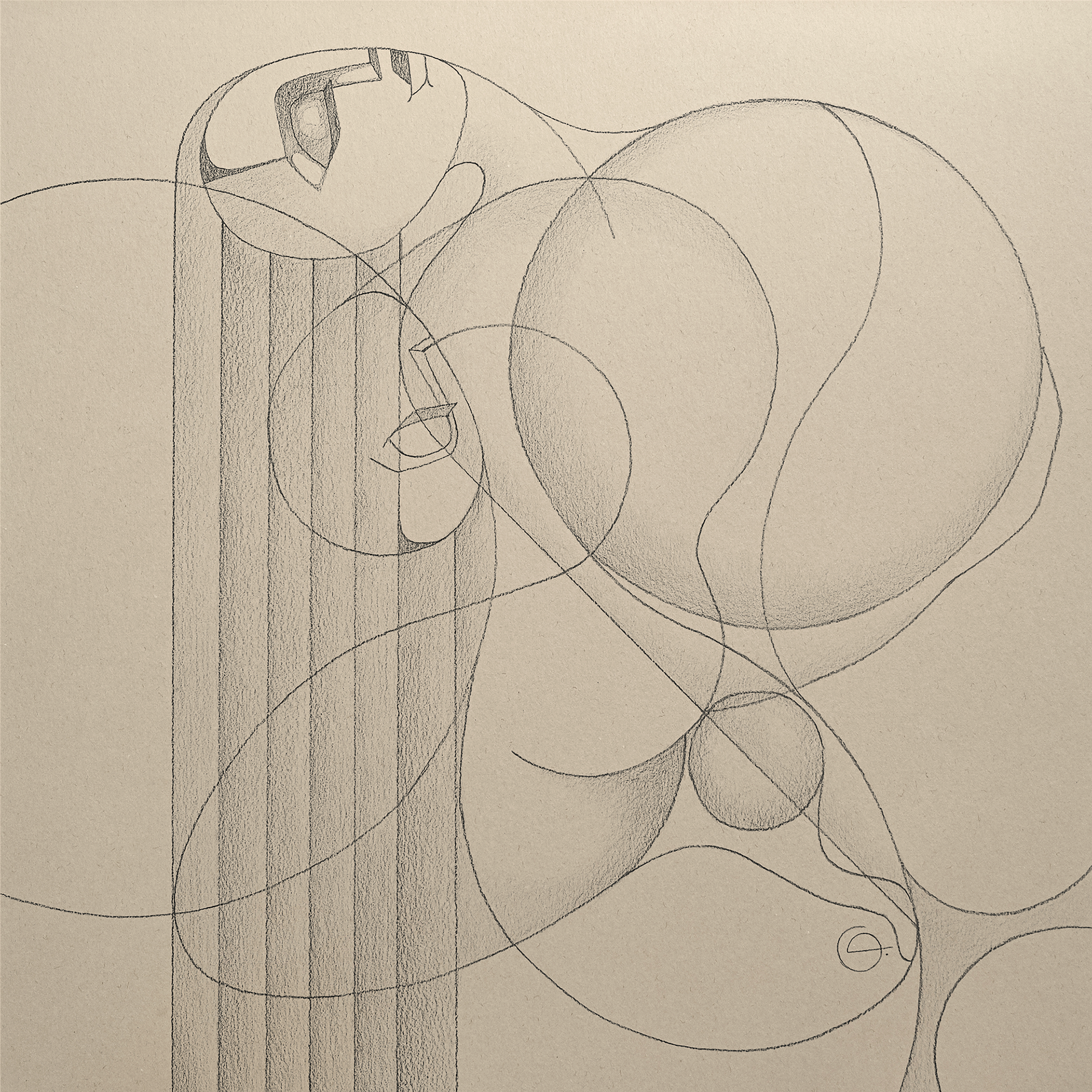
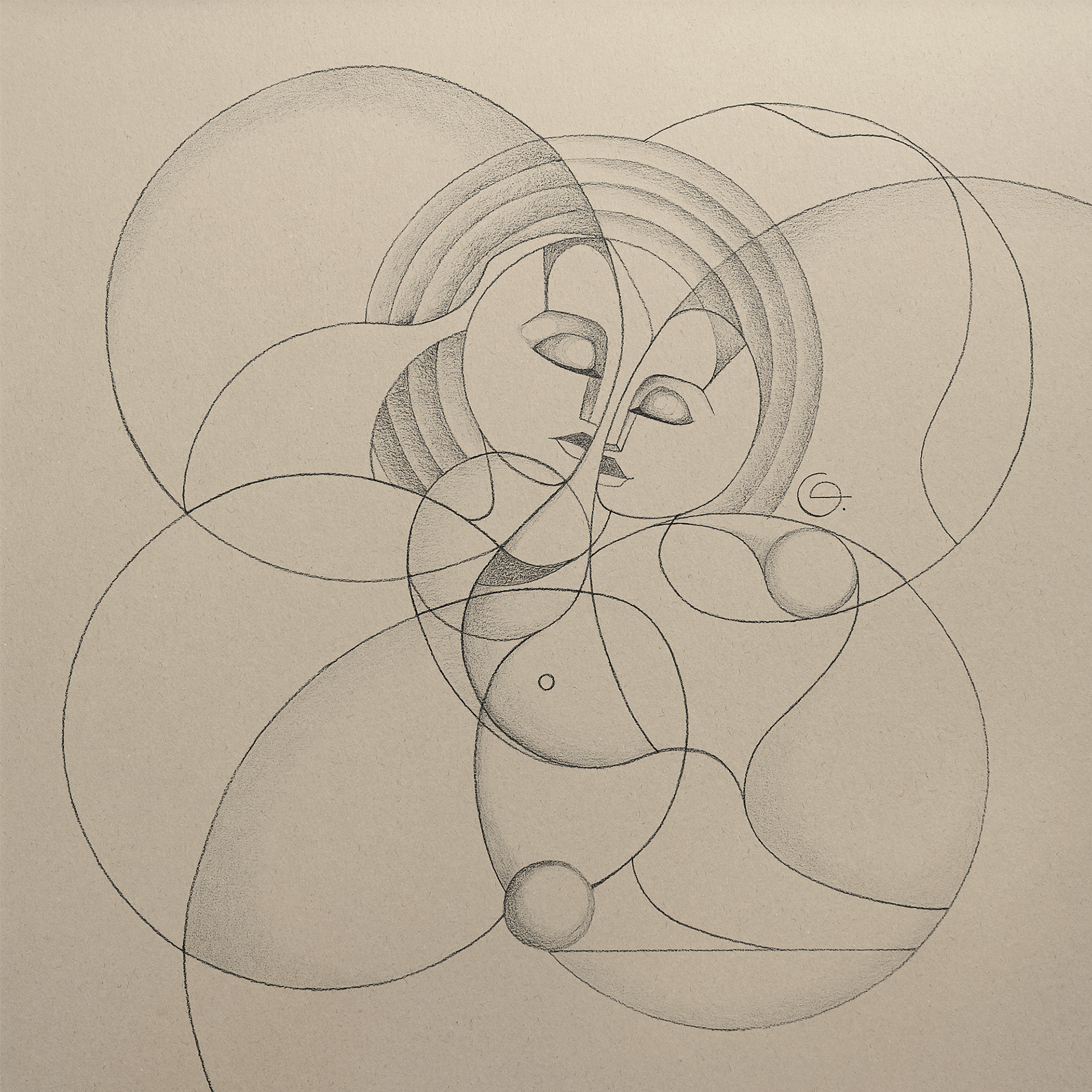
The Duality graphic series unfolds one of the central themes of Gryshchenko's practice — the idea of unity that contains multiplicity. These works are grounded in the understanding that qualities commonly perceived as opposites do not exist separately. They coexist within a single structure and reveal themselves only through interaction.
States such as impulsiveness and restraint, flexibility and decisiveness, stillness and motion are not positioned in opposition here. Instead, they are woven into a shared rhythm — interdependent elements of one process, a kind of internal “dance” of forces that cannot exist independently of one another.
This concept is embedded not only on a conceptual level but also within the structure of the works themselves. The compositions are built on a grid of circles unfolding through the geometric progression of the number two — a visual expression of duality within unity. The spiral ornament establishes a direction of movement, referring to the continuity of life processes, where development occurs not through division, but through expansion.
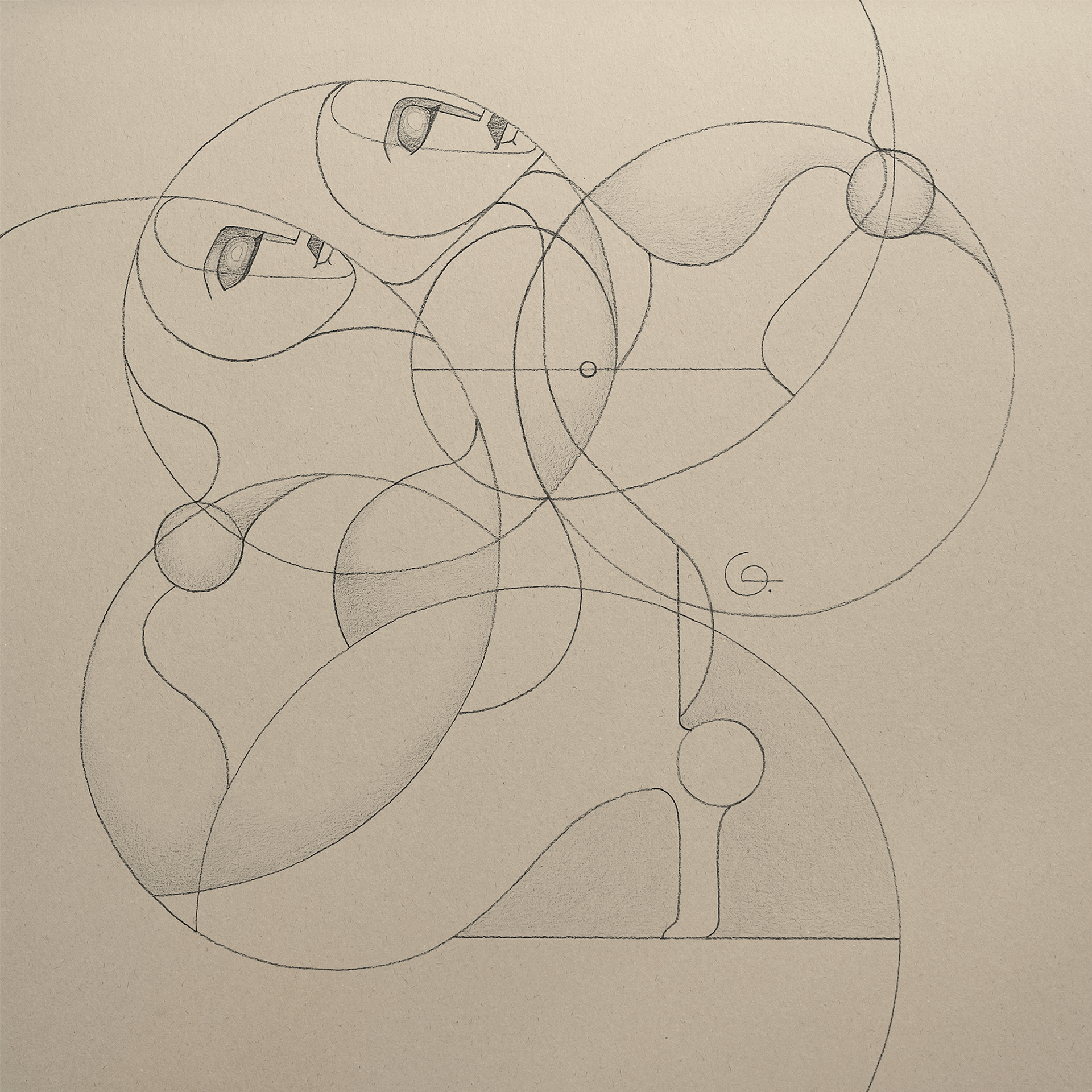
Graphics 26. Duality. Impulsiveness – Prudence
Graphite on paper, 50x50 cm, 2025
Graphics 26. Duality. Loud Silence
Graphite on paper, 50x50 cm, 2025
Graphics 24. Duality. Entities
Graphite on paper, 50x50 cm, 2025
Graphics 25. Duality. Flexibility – Decisiveness
Graphite on paper, 50x50 cm, 2025
The group of graphic works Graphics 16–18 is connected to personal experience, yet it focuses not on events themselves but on the internal processes they set in motion. In these works, Gryshchenko observes her own states in motion — how the past is felt, how loss is gradually perceived, and how a new sense of reality begins to take shape.
These drawings do not fixate on drama or appeal to empathy. Instead, they register the process of transformation itself — quiet, prolonged, and largely solitary. Questions of home, belonging, and the possibility of feeling grounded again are not framed as answers, but remain open, existing as states rather than conclusions.
In this series, ornament functions as a marker of identity and origin. Its structure gradually shifts, acquiring qualities of restriction and distance — a visual image of the impossibility of return and the slow “evaporation” of details from memory. Memory here is unstable: it protects by erasing, yet unexpectedly returns vivid, almost tangible flashes of the past.
These works speak of an inner turbulence that one faces alone, and of the only possible movement forward — into uncertainty, without guarantees or explanations.
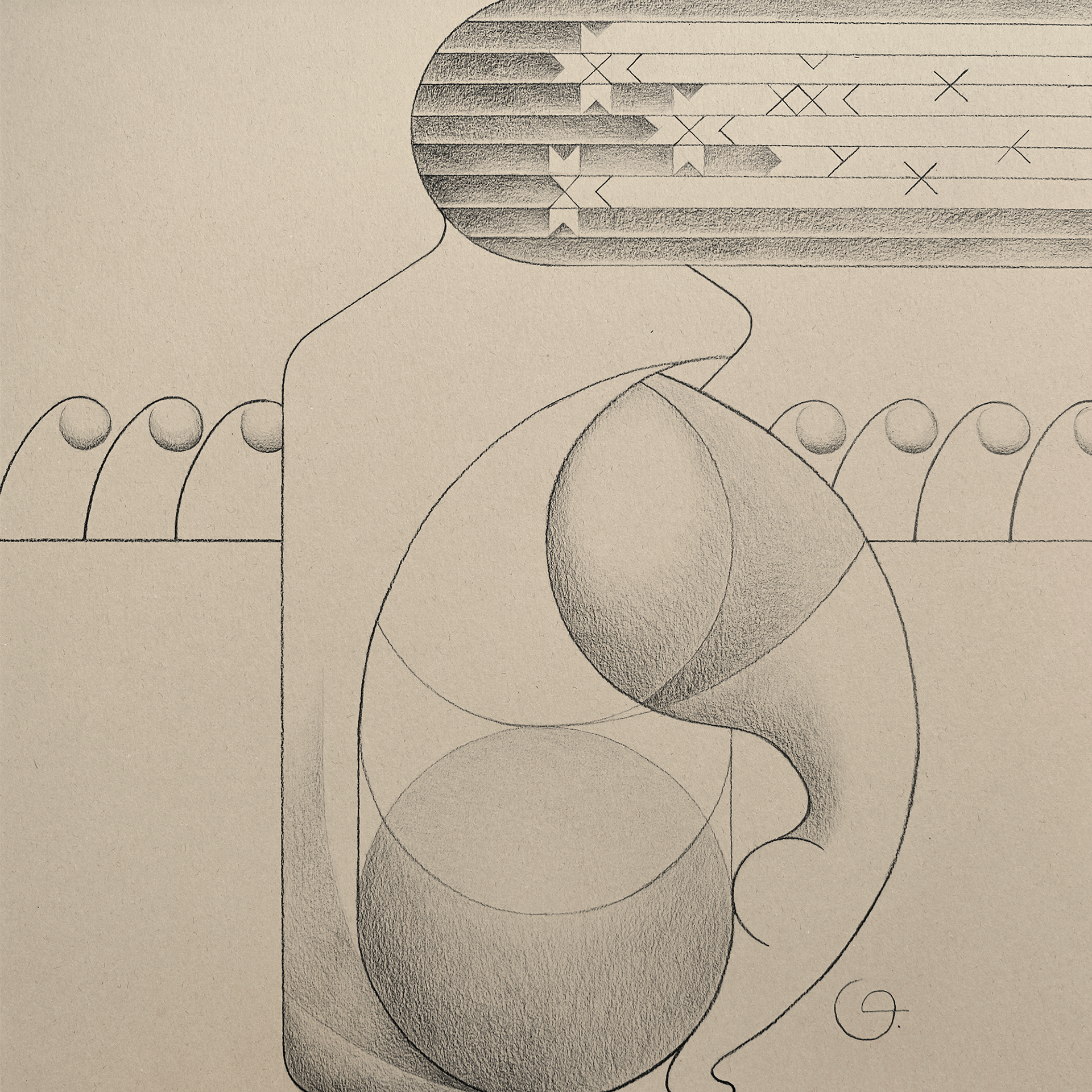
Graphics 17. Mari u Polia
Graphite on paper, 50x50 cm, 2024
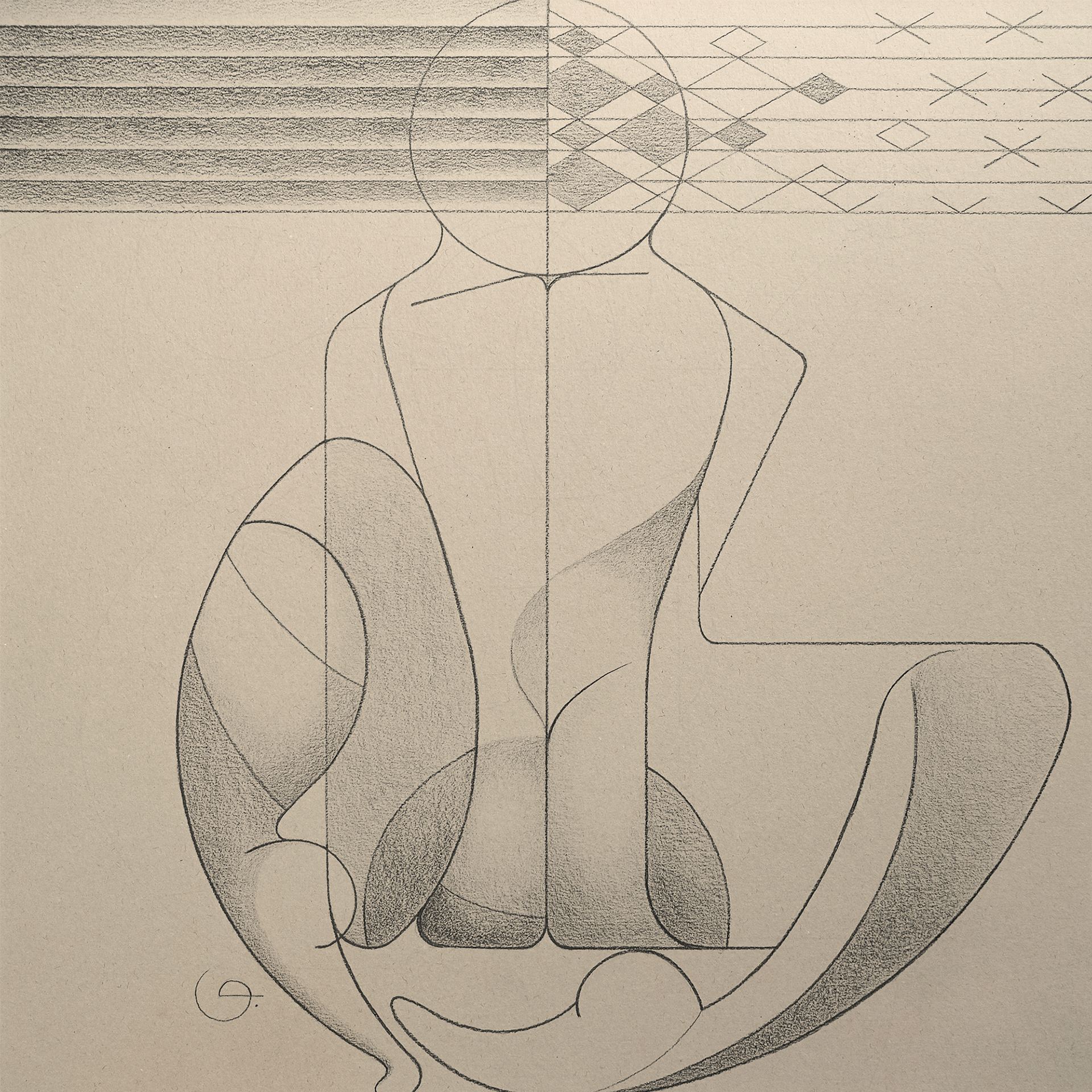
Graphics 16. Reflection 18x18
Graphite on paper, 50x50 cm, 2024
Artistic Philosophy
For Gryshchenko, geometry is not a formal system but a visual language through which humanity has sought, for centuries, to organize its understanding of the world and its own place within it.
At the core of this language are simple forms — the circle and the square. The circle is associated with that which resists complete measurement and rational comprehension. Its impossibility of being precisely measured — due to the presence of the number π — makes it an image of an ungraspable field of possibilities, from which ideas emerge and impulses toward materialization arise.
The square, by contrast, represents the realm of the material and the measurable — that which can be comprehended, structured, and embodied in form. For this reason, all of Gryshchenko’s paintings adopt a square format: it marks the moment when an idea transitions from an intangible field of possibility into material presence.
Her compositions arise at the intersection of these forms — where intuitive perception aligns with visible order. Geometry does not illustrate inner states or explain them; rather, it serves as a means of holding ideas, memory, and experience within a clear structural framework.
Within this logic, interconnectedness is not incidental. It is a foundational condition — an understanding that form, experience, and identity do not exist in isolation, but belong to a single ordered process that unfolds beyond individual control, yet can be sensed through form.
Early Works
An important point of origin in Gryshchenko’s practice is "Trust" (2015), her first large-scale painting. Created at a moment of intuitive searching, the work reflects an early engagement with structure, balance, and the human figure as a symbolic vessel.
While the visual language was still forming, "Trust" established the foundation for what would later become a coherent conceptual system — a commitment to geometry as a means of grounding intuition within form.
Earlier works from this period mark a phase of exploration rather than conclusion. They remain present as context, but the focus of the practice today lies in reduction, clarity, and structural precision.
A selection of earlier works and additional materials is available in a private archive upon request.
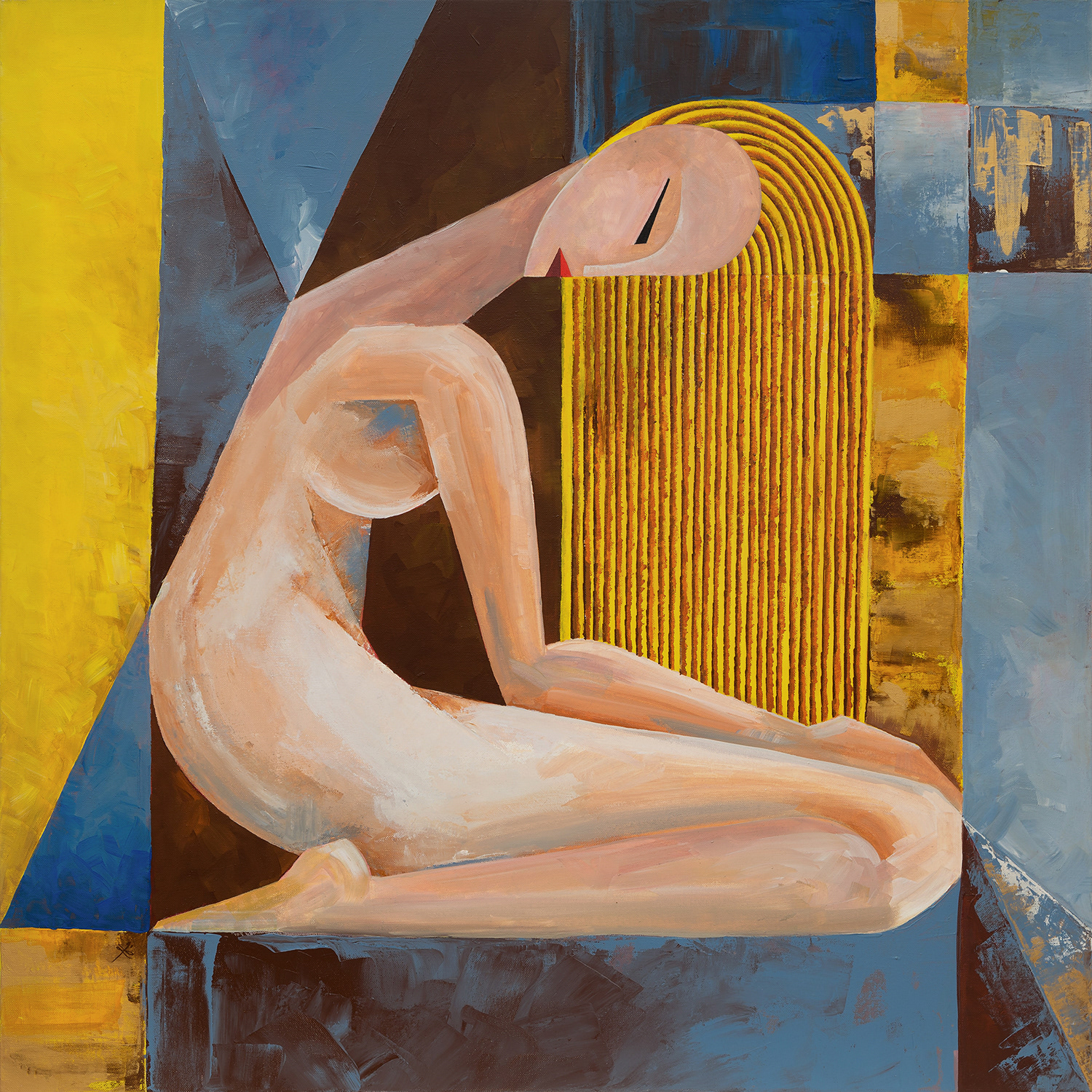
Trust
Acrylic on canvas, 100x100 cm, 2015
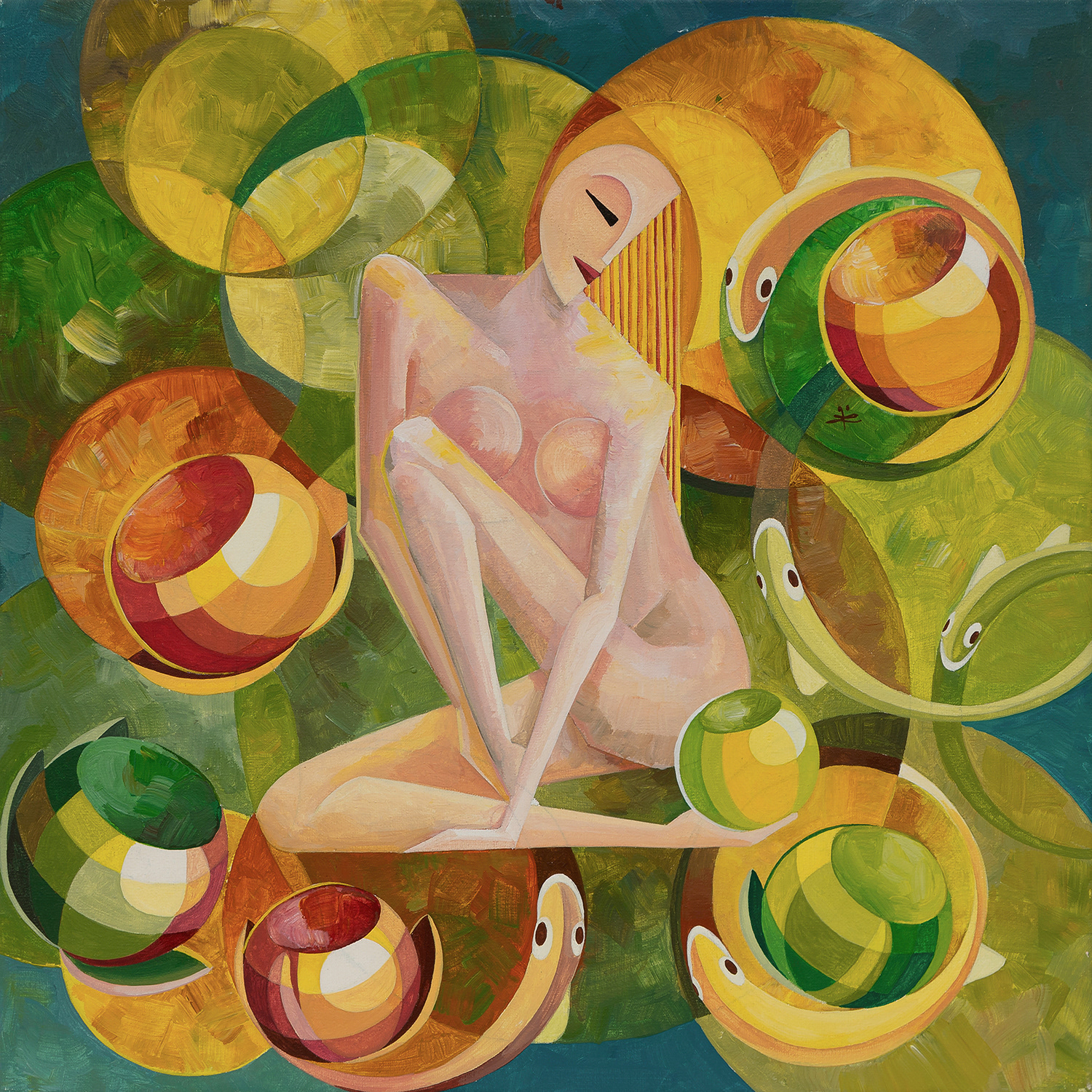
The Girl With Lotus Flowers
Acrylic on canvas, 40x40 cm, 2018
Interconnectedness
Across painting and drawing, Gryshchenko’s work is guided by a single internal principle — not as a concept to be explained, but as a condition to be sensed: no form exists in isolation.
Lines, rhythms, and figures assemble into an interdependent structure in which memory, experience, and perception are linked by invisible connections. The female form appears not as an image, but as a vessel — a point where multiplicity is held within unity.
This practice does not seek to define. It offers a space in which order is not constructed, but recognized — through stillness, rhythm, and inner coherence.